Sinners reminds me of The Fifth Element in that it is an excellent movie that suffers from teasing you with something bigger than what made it on screen. It could easily be another hour longer but then it would be something different. It is a more-than-but-not-quite-complete movie.
Category: Media
52 Word Review: One Battle After Another
One Battle After Another was well-written, well-paced, well-cast, well-acted and well-shot, and yet felt completely forgettable and somehow unoriginal. There were echoes of Tarantino, Terminator 2, Easy Rider and many others, but that’s all it felt like. This might be an accomplishment for other directors but for Anderson it was a disappointment.
Media Diet: January 2023
Inspired by Kottke’s media diet posts, I’m going to try and collect my own thoughts here. Also, the holidays is always a good time to catch up on watching/reading so there’s quite a bit to cover here!
Books
A Prayer for the Crown-Shy by Becky Chambers – A light second book in the series, I didn’t enjoy it as much as the first, which wasn’t amazing, but left the reader with some nice thoughts to dwell on. This book hinted that it was trying to do that again, but didn’t manage to pull it off.
So Good They Can’t Ignore You by Cal Newport – I’ve resolved to read more non-fiction this year, and enjoyed this one. It’s very typical in the thesis/data/example mixture but is short and well-paced and makes a good case, especially to someone early in their career.
Kindred by Octavia Butler – My second reading of Butler after being disappointed in Xenogenesis, and I enjoyed this much more. Excellent prose and pacing, a single-threaded story that doesn’t lose track of itself, time-travel book that doesn’t get lost in the details, just a solid book all around. It certainly could have dug a little deeper on the hypothetical social issues or the other characters, but then it would have been a different book and been far less likely to pull it all off.
The Chronicles of Narnia: The Silver Chair by C. S. Lewis. – A decent fantasy adventure. Not quite as charming as other entries in the series, but also somewhat (though not entirely) less allegorical.
The Chronicles of Narnia: The Last Battle by C. S. Lewis. – Underwhelming though satisfactorily final conclusion to the series. It started with a lot of promise but quickly stumbled into a predictable and rushed dash to wrap things up.
Artemis City Shuffle by Jessie Kwak – A fun, short and sweet intro to the series. Seems optional but if the rest of the series is similar it should be a fun ride.
Movies
Black Adam – Meh.
Pale Blue Eye – Decent.
Glass Onion – OK.
Games
Marvel Snap (mobile/Steam) – I started playing this a few months ago and it’s a solid addition to the digital card game genre. Fast-paced, highly variable but deep enough to stay interesting even after hundreds of games. The progression mechanism still feels a little rough but the game itself is fantastic. The meta is pretty good for a card game, I regularly see an assortment of decks, but it is has converged on a few mechanics, so hopefully they’ll stay ahead of that. They recently tuned (nerfed) a card that risked tanking the game (Leader) which was nice to see, so hopefully they’ll also tune a few of the dumber locations (District X) and keep the game fresh.
Dwarf Fortress (Steam) – I’ve only logged a few hours on the new version, but I played it years ago in the text-based interface. It’s a great game if you’re looking to be rewarding for committing to a long learning curve (which I’m not, at the moment), and the new graphical UI makes it much more appealing by shorting that curve.
Outpath: First Journey (Steam) – A demo for a future game, it feels promising as a blend of casual/survival/crafting genres. The low-res graphics are tiresome, the novelty of retro “8 bit” graphics has long passed, and requires a level of expertise to pull off these days, and this game lacks that.
Television
Yellowstone (Season 5, Part 1) – This show has always been kind of dumb but also kind of fun, albeit in a lazily violent way. Lately it’s been trying to be less dumb and as a side effect is becoming less fun. It’s safe to say that politics and intrigue are not Sheridan’s strong suit. The barometer of the show has always been Rip, and he’s transitioned very rapidly from a skilled gangster enforcer to … a dad.
Andor (Season 1) – An exceedingly well-constructed show, with several story arcs in series as well as an overarching one. The heist was cliché but sets everything else up and we get a whole bunch of new and detailed perspectives on the Empire and Rebellion that add more details to Star Wars canon than anything else since the movies.
Jack Ryan (Season 3) – Despite a credible star and decent marketing, I feel like this show always flies under the radar. It’s a good spy/action thriller that doesn’t necessarily stay true to Tom Clancy canon, but certainly does to the spirit of his books. I lump this in with the Mission Impossible movies as engaging, well-crafted , brain-not-quite-off action thrillers.
Podcasts
The Rest is History is a recent discovery and highly recommended. Their recent episodes on the origins of Nazism show how so many factors, some outside Germany and others even before it existed, played into such a terrible event.
Hardcore History is also always highly recommended. Similar to the The Rest is History’s series but in far more detail, “Supernova in the East” covers what led Japan into World War II. It filled in a lot of gaps in my knowledge and presented a far more complete picture than most Americans (and possibly Japanese) students would get at school.
Upcoming
Some things I’m hoping to read/watch/play soon:
- Bullet Train
- Winter’s Heart
- Ghost Pirate Gambit
52 Word Review: Glass Onion: A Knives Out Mystery
Another Rian Johnson movie that falls short of its astronomical opinion of itself, Glass Onion was still somewhat entertaining. The charismatic cast, good scenery and pacing and interesting premise were held back by pedestrian writing, shallow “I’m so quirky!” characters and an ending that ran out of gas long before the credits.
52 Word Review: Black Adam
The Rock is good enough at playing one role (The Rock) that we’ll happily see him do it over and over again, but he didn’t do that here, with predictable results. Like catered chicken parm or Avatar, it was not bad because of mistakes, but mildly offensive in how forgettable it was.
52 Word Review: Everything Everywhere All At Once
A brilliant, crazy, fun, funny, surprising, heartwarming, bonkers movie that is about, and comes closer than possibly anything else could in two hours to answering the question of, the meaning of life. I might be permanently happier for having watched this movie, and grateful for the opportunity. My favorite movie in years.
52 Word Review: Star Wars: The Force Awakens
Star Wars: The Force Awakens was made, and made well, from top to bottom, by people that love Star Wars. Though heavy on the nostalgia, it skips today’s rampant “reimagining” and captures the fun and excitement of the universe while standing up as a modern movie. A great addition to the series.
52 Word Review: Mad Max: Fury Road
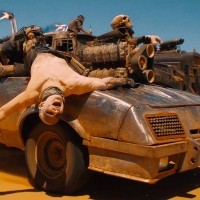
George Miller pulled off an impressive feat with Mad Max: Fury Road. After a 30 year hiatus, he managed to craft a movie that is better in every conceivable way than the previous 3 installments. It’s everything an action movie should be: fun, fresh, relentless, uncompromising, and extreme but, perhaps most surprisingly, not dumb.
Readability + Kindle + Something Else

I really like my Kindle. Beyond all of the more tangible/advertised benefits it has, the most important thing it’s done for me is that I’ve been reading more since I started using it.
I also really like Readability, I think it’s an optimistic and hopeful view of the future of content on the internet, rather than the arms race of ad blockers and the AdWords-fueled plague of content scrapers.
The fact that these two things I like can join forces is also great. I can send an article to my Kindle via Readability. If I see some long, thoughtful piece, I click two buttons and it will be there for me when I settle in for the evening. Unfortunately I don’t/can’t use this as much as I’d like for two reasons.
Lost Commentary
I find most of my new/fresh content via link-sharing sites. Starting long ago in the golden age of Slashdot, I’ve gotten into the habit of checking the comments on an article before I read it. I don’t usually read the comments, I just skim them, and get a sense of how worthwhile it is to read the article. If I see a healthy discussion, or lots of praise, it’s clearly something worth spending a few minutes on. Even if I see some well-written refutations, it can be valuable in a “know your enemy” sense. If I see something like “Here’s the original article” or “How many times will this be reposted?” then perhaps I’ll just move on.
After I’ve read the article I might go back and read those comments, or perhaps even leave one. With the Kindle/Readability combo, I can’t do that. Blog posts will come through with their own comments, but for whatever reasons, there always seems to be better discussion offsite.
Linkability
The “premium” content sources like major magazines or newspapers rarely link off of their stories. I think this is conditioning from the print era, but it actually plays well to this offline system. If an author talks about another website he’ll probably include the relevant details in the article, or quote it, or include a screenshot.
Blogs, however, are chock-full of links, often without context, sometimes just for humor, but sometimes as an essential part of the article. Very few blog posts are actually viable in a vacuum. I have a special folder in Google Reader called “droid” which are blogs that generally don’t do this, and are good for reading when I have idle time (via my phone, hence the name) and don’t want to deal with links.
Something Else
I’d like to have some way to read an article or post offline, that can pull in these other sources. Perhaps a “send to kindle” that actually generates an ebook with the article as the first chapters and comments from my favorites collated into other chapters. Or perhaps a Kindle app that can do this and stay updated. What I don’t want is a mobile OS-style app that pops open browser windows, as that’s an entirely different use case. A “send back to computer” would be useful for stories that require switching back to browse mode.
TLDR: Sometimes I just want to read, not browse.
Books as Clutter

Like the culture at large, I’m moving from physical media to digital. I’m slowly getting rid of almost all paper documents via my scanner. I haven’t bought a CD in years. I’ve never been a collector of movies. I haven’t had a roll of film developed since the early 90s. Our printer isn’t even usually hooked up, and when it is it’s usually to sign-and-scan a contract or something, as I haven’t found a great replacement for that yet.
Even more than the digital conversion, I don’t even bother with much physical media. Files are backed up to online services like S3 or Rackspace via Jungledisk. I have some 1TB external drives for peace of mind and Verizon’s inevitable billing errors, but never burn anything to DVD or CD.
I kept all of my old CDs, because I wasn’t comfortable with throwing out full-quality versions of something. There is FLAC, but at the time I switched a few years ago I wasn’t happy with the FLAC-encoding tools so I went with 256k VBR MP3 files, and figured I’d re-encode them again someday and then be able to toss the discs. This argument does’t make a ton of sense given that I now pay for degraded copies of new music, but that’s a little psychology I’ll put off analyzing.
Books, however, are tough for me. I’ve been using a Kindle for a while, and love it, as do most who have one. I look at my bookshelf and think “this doesn’t really need to be here”. I’ve tossed a number of books, but I pick up an old Choose Your Own Adventure book and the innumerable hours I spent reading and re-reading them comes back to me. The thought of throwing it away is unsettling.
I will probably never even read these books again. I’m not sure if my potential future kids would bother with them, but the sentimentality runs too deep. So I keep them, and even my minimalist girlfriend probably understands. It’s not like I have thousands of them, there’s probably 100 books I can’t toss.
Some books I keep because technology just hasn’t caught up to them yet. Cookbooks, picture books, and so on. These will probably go eventually, I end up tossing a few each time I look through the shelves. The sentimental books that are signed by the author or were gifts I keep too, I don’t see a real clutter issue there either, and again, I don’t have too many of these.
The quandry comes with new books. These books have no sentimental value yet, nor will they ever, and I think that’s part of the trouble. The part of me that wants to move into the future, to be more mobile, more organized, more free of physical possessions has not yet found a decisive victory over the nerd who did a book drive for his Eagle project and spent those precious half-days of school lost in the annex at the Ames Free Library.
I’ve always looked at books as some strange kind of investment. I spend $10 on a book, and read it. I can read it again years later, or give it to someone else, there’s some residual value, (not monetary, selling books is hardly worth the trouble IMO). But now I click “buy it now” and I still realize what is arguably the real value of the book, yet I have nothing to put on my shelf and page through from time to time. Nothing to jog my memory when I see it, or spark a conversation when someone else sees it. Nothing I can hand to a friend and say “you really need to read this”.
I’m not even that concerned with Amazon going away or revoking my access to these books, while that would be unfortunate, I can always buy them again somewhere else. Physical books can be destroyed or stolen too, probably even more easily than e-books. Nor am I too concerned with the privacy issues, although I do recognize that lack of concern is a privilege not everyone has. The idea of an oppressive government “burning” or suppressing a book is real as well, but I think computers are so numerous now that this knowledge will find a way to survive. One small hard drive can hold literally millions of books, I’m sure at least one copy will survive.
Unfortunately this isn’t a very constructive post, as I don’t think there is an actual solution to this. I guess this is more of a eulogy. It’s a problem faced by most generations that see the things they grew up valuing being devalued, and it stings for someone who, if you asked him anywhere from age 5 to 15, probably would have said the most valuable/important thing he owned was his book collection.